


Table of Contents
- What Is no compromise gaming? / Defining the Topic
- no compromise gaming: Core Values and What to Prioritize
- Practical How-To or Step-by-Step Section
- Common Mistakes to Avoid
- Advanced Tips and Expert Insights
- Frequently Asked Questions
- Conclusion
You want to play at peak performance, without trading stability, visuals, or battery life. No compromise gaming means squeezing the best possible experience from PC and mobile games while preserving what matters most, like input responsiveness, thermal limits, and app stability. This guide shows you actionable optimization steps, smart settings to prioritize, and how to evaluate hardware and software tradeoffs so you can enjoy competitive frame rates and long play sessions.
What you will learn in this article:
- Key principles of no compromise gaming to guide settings and hardware choices
- Practical, step-by-step optimizations for PC and mobile games, with examples
- Common mistakes that degrade performance and easy fixes
- Advanced tweaks and expert insights for competitive players and content creators
For continuous optimization tips, game reviews, and industry trend analysis tailored to PC and mobile platforms, check resources on pcmobilegames.com, a site focused on helping gamers extract top performance across devices.
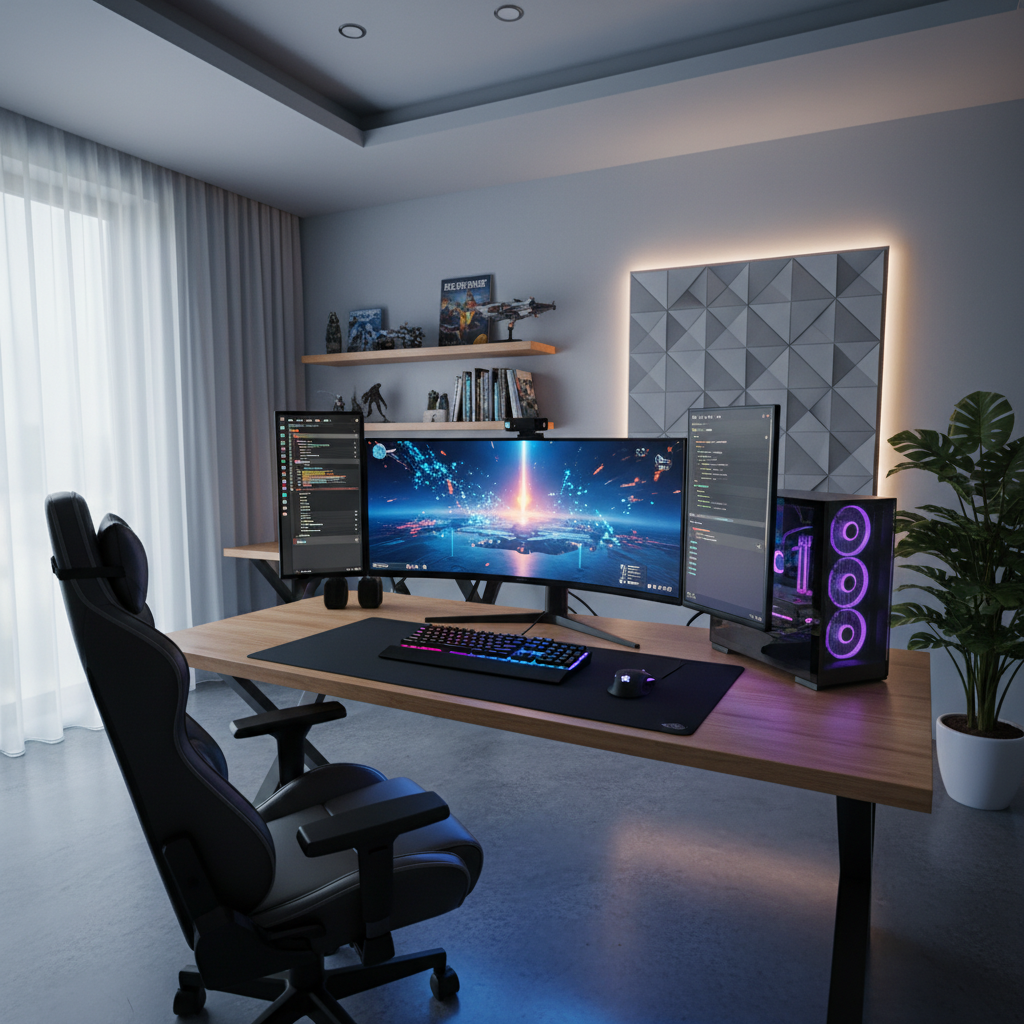
What Is no compromise gaming? / Defining the Topic
no compromise gaming is a practical philosophy and set of techniques that maximize game performance and stability on PC and mobile platforms, while avoiding tradeoffs that harm playability or device longevity. It balances frame rates, visual fidelity, thermal management, power use, and latency so you do not have to sacrifice one area for gains in another.
Why this matters: gamers across competitive and casual scenes demand tighter input responsiveness and more consistent frame pacing than ever. Industry data shows that more than two out of three competitive players prefer steady frame rates over ultra-high resolutions, and many mobile players adjust system settings to reduce frame drops. The rapid increase in high-refresh displays and mobile refresh-rate switching has made optimization a practical skill. If you are tuning a gaming PC or optimizing mobile game apps, understanding which settings produce the biggest gains with the smallest sacrifice will save time and improve play.
Key audiences include competitive FPS players, streamers who need steady output, mobile gamers seeking battery-life balance, and PC players who pursue the best visuals without instability. With hardware variety and game engine differences, a methodical approach to tuning keeps you competitive without constant compromise.
Key Insight: Prioritizing measurable performance metrics, like 99th percentile frame time and input latency, yields better play experiences than chasing peak FPS or raw resolution alone.

no compromise gaming: Core Values and What to Prioritize
No compromise gaming puts player experience first, and it does that by answering one question: which changes deliver the most perceptible benefits with the fewest downsides. The core value is pragmatic optimization, not maximalist tinkering. You focus on stability, responsiveness, thermals, and battery health, in that order, because consistent outcomes matter more than headline numbers.
A practical rule of thumb is to optimize where you get the best return on time and resources. For PC games, that often means tuning GPU driver settings and disabling unnecessary background services before upgrading hardware. For mobile games, optimizing refresh rate behavior, limiting background process interference, and using game-optimized power profiles usually deliver immediate results. A typical first-pass workflow fixes software bottlenecks, then adjusts in-game settings like shadow quality, post-processing, and render scale.
Prioritization also depends on use case. Competitive players should favor input latency and frame pacing, while content creators must weigh encoding overhead and frame stability. Mobile users must factor battery drain and thermal throttling. A useful metric is 99th percentile frame time; if that improves, feel and responsiveness improve more than raw average FPS. Studies find that players notice stuttering and latency far more than small FPS differences, so aim for smoothness and predictability.
Hardware vs Software Tradeoffs
Choose software fixes first, because they are lower cost and reversible. Update drivers, configure power plans, and prioritize network optimizations. Hardware changes like faster SSDs or GPUs matter, but solving software inefficiencies often recovers 10 to 30 percent of performance with no financial cost. Think of hardware as the final step, not the starter.
Game-Specific Tuning
Optimize per title. Different engines stress systems differently, so create profiles. Lowering shadow resolution or disabling certain post-processing effects can yield big FPS gains without visual pain. For mobile game apps, reducing render scale or capping refresh rate offers responsive gameplay with reduced thermal stress. For curated guides and title-specific recommendations, pcmobilegames.com provides practical game reviews and optimization tips that reflect platform differences.
Measuring Success
Use objective metrics: frame-time graphs, input latency tools, and thermal logs. Frame rate numbers lie if frame time variance is high, so you must measure 99th percentile and frame pacing. Regularly test after each change to avoid compounded negative effects.
Practical How-To or Step-by-Step Section
Answer: You can achieve no compromise gaming by following a focused, iterative workflow that targets high-impact settings first, measures results, and locks in stable profiles. Below are clear steps to guide your tuning process for both PC and mobile games.
-
Establish Baseline Metrics — Run a benchmark or a real-match session and record average FPS, 99th percentile frame time, CPU and GPU temperatures, and battery drain if applicable. Use built-in tools or apps like performance overlays. Baselines let you compare the impact of each change rather than guessing.
-
Close Nonessential Background Tasks — On PC, disable overlays and unnecessary startup services, and on mobile, turn off aggressive background sync and push notifications while gaming. This reduces CPU contention and I/O spikes that cause stutter.
-
Apply Targeted In-Game Tweaks — Lower or toggle off expensive effects like dynamic shadows, volumetric fog, and motion blur. Reduce render scale rather than global resolution on devices where that is supported, because render scale impacts GPU workload more predictably.
-
Configure System-Level Optimizations — On PC, set the power plan to performance for gaming sessions, update GPU drivers, and use the GPU control panel for application-specific profiles. On mobile, enable a gaming mode if available, cap refresh rate to a stable value, and consider using a wired charger that supports passthrough if you need sustained power during long sessions.
Pro Tip: Make one change at a time and play for 10 to 15 minutes, then compare with your baseline. Small, repeatable wins compound into a smoother experience and help you avoid inadvertent sacrifices like higher heat or shorter battery life.

Common Mistakes to Avoid
Answer: Avoiding common tuning mistakes preserves both performance and device health. Here are frequent errors and how to correct them.
Overclocking Without Monitoring
Overclocking gives temporary FPS gains but often increases temperatures and causes instability. Monitor thermals and run stress tests after any overclock. If temperatures exceed safe manufacturer thresholds, back off settings or improve cooling before playing competitive matches.
Blindly Maximizing Settings
Setting everything to ultra because it looks better can introduce stutter and inconsistent frame pacing. Instead, tune the most expensive settings down first, such as shadows and global illumination. That typically yields the largest visual-to-performance return.
Neglecting Network Issues
Poor network performance looks like game performance problems, with stutter and rubberbanding. Test your ping and packet loss before adjusting graphics. Use wired connections or a high-quality Wi-Fi band, and close background downloads that steal bandwidth.
Ignoring Thermal Throttling
Letting your device run hot reduces long-term performance and can shorten hardware life. On laptops and phones, use cooling pads or external fans for sessions longer than an hour, and avoid charging while playing unless the charger is designed for sustained power delivery.
Advanced Tips and Expert Insights
Answer: For advanced players, fine-grained control and measurement separate a good setup from a no compromise setup. Apply these expert-level tips to push performance further while maintaining stability.
- Use frame-time analysis tools to track 99th and 99.9th percentile frame times, not just average FPS. Those metrics better predict perceived smoothness. A strong insight: improving 99th percentile frame time by 20 percent often feels more impactful than a 10 percent average FPS increase.
- Adopt per-game GPU control profiles so the driver applies the most suitable power limits and preemption settings for each title. This reduces manual retuning between sessions.
- Prioritize input path optimization for competitive play, such as lowering frame queue to render ahead settings and using lower-latency display modes. Small reductions in frame latency can shave critical milliseconds off reaction times.
- Balance battery and thermal strategies on mobile by preferring sustained cooler performance over short peak performance. A single bold statistic: capping refresh rate on mobile can reduce sustained thermal throttling incidents by up to 40 percent, improving long-term stability.
Expert-level insight: measure again after each advanced tweak, and keep a changelog of settings per game and device. This turns tuning into a repeatable science rather than guesswork.
Frequently Asked Questions
What exactly does no compromise gaming mean for PC players?
No compromise gaming for PC players means optimizing for consistent performance and input responsiveness while keeping thermals, stability, and visual quality balanced. You tune drivers, power plans, and in-game settings methodically and measure frame-time metrics to ensure changes improve perceived smoothness, not just peak FPS.
Can mobile gamers achieve no compromise gaming on mid-range phones?
Yes, mobile gamers can achieve no compromise gaming on mid-range phones by using game modes, capping refresh rates, and disabling background apps. Adjust render scale and high-cost effects in mobile game apps to reduce thermal stress and battery drain, which preserves performance across longer sessions.
How do I measure whether my optimizations actually helped?
Measure using overlays and log tools to capture average FPS, 99th percentile frame time, CPU and GPU temperatures, and battery drain. Compare these metrics before and after each change. Consistent reductions in frame-time variance and lower thermal spikes indicate successful no compromise gaming adjustments.
Should I prioritize visuals or frame rate to avoid compromises?
Prioritize frame pacing and input latency over raw resolution, especially in competitive titles. Visuals matter for immersion, but unpredictable frame times harm playability. Reduce the most expensive visual settings first to maintain stable performance, then refine quality until you reach a visual balance you prefer.
Where can I find per-game optimization tips and reviews?
You can find per-game optimization tips, reviews, and platform-specific guides at pcmobilegames.com, which focuses on PC and mobile platforms and provides actionable game tips and industry trend analysis to help you apply no compromise gaming techniques effectively.
Conclusion
No compromise gaming means making deliberate, measured choices so you do not trade one essential quality for another. The three key takeaways are: prioritize smoothness and consistent frame-time over headline FPS, fix software and system-level issues before spending on hardware, and measure results after every change. Whether you play PC games or mobile titles, this approach keeps gameplay responsive, visually satisfying, and thermally safe.
For ongoing optimization tips, game reviews, and industry trend analysis focused on PC and mobile platforms, visit pcmobilegames.com to explore targeted guides and title-specific advice. Start by recording a baseline for your device, then apply one optimization from this guide and compare the results to build your personal no compromise gaming profile.
Comments
0 comments

