

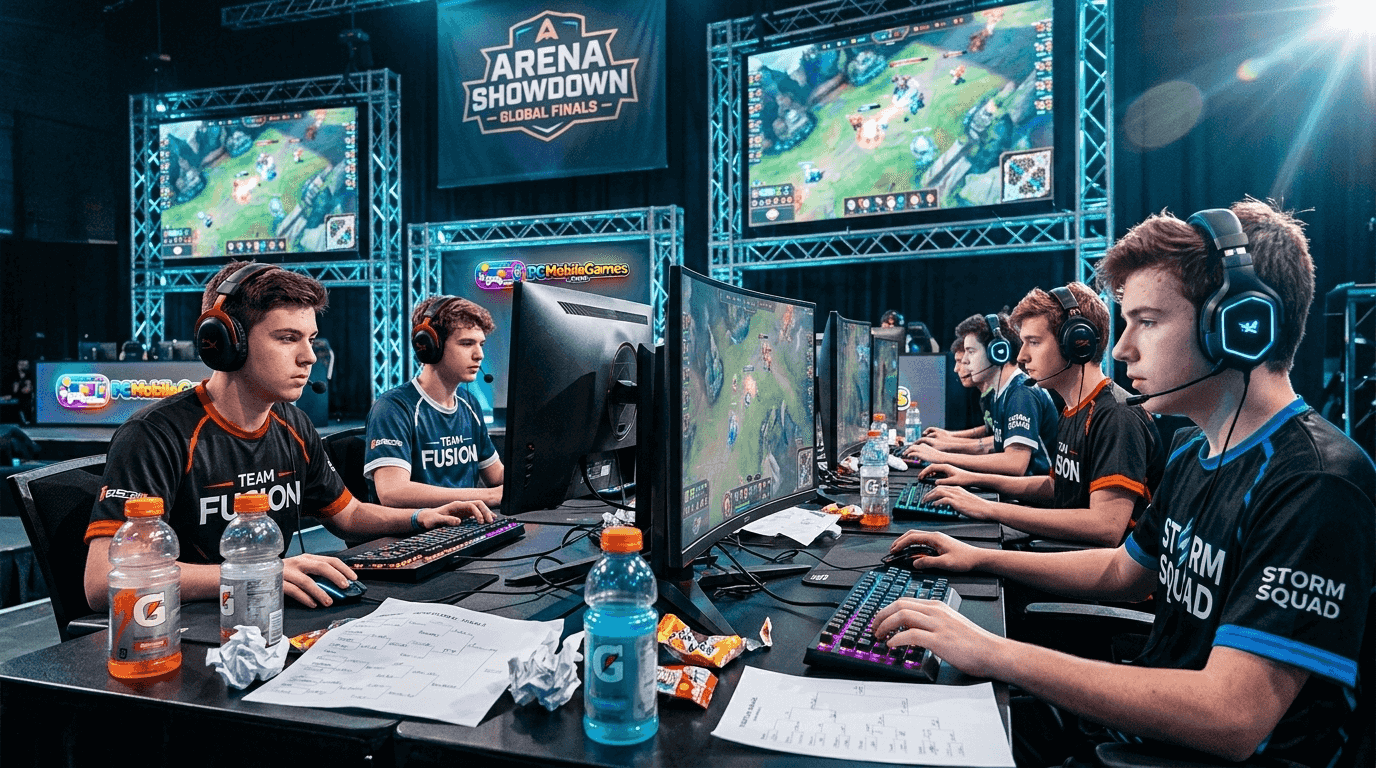
Competitive gaming is often misunderstood as just playing video games with friends, but it represents a serious, skill-driven activity that attracts millions worldwide. This structured form of play involves organized tournaments, professional leagues, and amateur competitions across PC and mobile platforms. Understanding what sets competitive gaming apart from casual play can help you navigate this booming industry, whether you want to compete, spectate, or simply appreciate the strategic depth involved. This guide explores the core aspects of competitive gaming in 2026, from defining its scope to examining the skills required and trends shaping its future.
Key takeaways
| Point | Details |
|---|---|
| Definition and scope | Competitive gaming is a structured form of video game play emphasizing skill, strategy, and competition with organized rules and rankings. |
| Platform diversity | Both PC and mobile platforms host thriving competitive scenes with unique games and communities tailored to each format. |
| Essential skills | Success requires hand-eye coordination, strategic thinking, teamwork, and adaptability to evolving game metas. |
| 2026 trends | The esports industry is growing rapidly in 2026, driven by mobile esports, streaming, and global audience expansion. |
| Getting started | Join local tournaments, practice consistently, and engage with competitive communities to build your skills and network. |
Understanding competitive gaming: definitions and scope
Competitive gaming involves organized contests where players test their video game skills against others in structured environments. Unlike casual gaming, where you play for relaxation or entertainment without formal stakes, competitive gaming introduces rules, ranking systems, prizes, and recognition. This distinction transforms gaming from a leisure activity into a performance-driven pursuit.
The scope of competitive gaming extends from amateur tournaments hosted in local gaming cafes to professional esports leagues broadcast to millions globally. Competitive gaming is a structured form of video game play emphasizing skill, strategy, and competition, requiring dedication similar to traditional sports. Players train daily, analyze opponents, and refine techniques to gain competitive advantages.
Several key aspects separate competitive gaming from casual play:
- Formal rules and standardized settings ensure fair competition across matches
- Ranking systems track player performance and determine tournament seeding
- Prize pools and sponsorships provide financial incentives for top performers
- Spectator engagement through live streaming and commentary creates entertainment value
- Team structures with coaches, analysts, and support staff mirror traditional sports organizations
Popular genres dominate the competitive landscape. First-person shooters like Valorant and Counter-Strike emphasize reflexes and tactical positioning. Multiplayer online battle arenas such as League of Legends require strategic resource management and team coordination. Strategy games demand long-term planning and adaptability to opponent tactics. Fighting games test execution precision and matchup knowledge.
Both PC and mobile devices host competitive gaming, though each platform attracts different communities and game types. PC gaming traditionally dominates Western markets with established titles and infrastructure, while mobile competitive gaming has exploded in regions with widespread smartphone access but limited PC penetration. Understanding the role of esports in gaming impact trends helps contextualize how these platforms coexist and complement each other in the broader competitive ecosystem.
Competitive gaming on PC and mobile: games and communities
PC competitive gaming in 2026 continues to feature established titles that have defined esports for years. League of Legends remains the dominant MOBA with regional leagues across North America, Europe, Korea, and China. Valorant has cemented its position as a premier tactical shooter, combining precise gunplay with character abilities. Counter-Strike maintains its legacy as the purist’s competitive shooter, emphasizing raw skill and teamwork. Dota 2 offers the highest prize pools in esports through its annual International tournament. These games share common traits: high skill ceilings, regular balance updates, and robust competitive infrastructures.
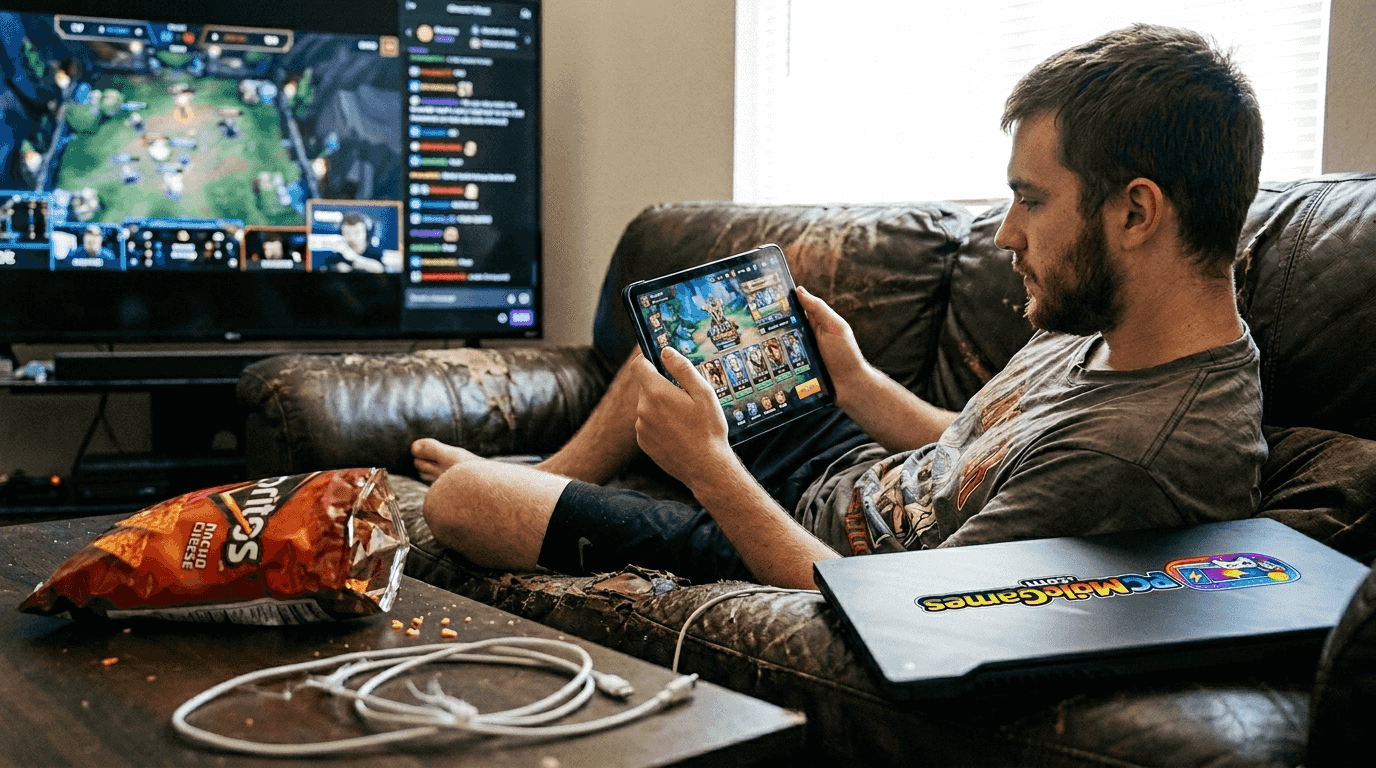
Mobile competitive gaming has experienced explosive growth, particularly in Asia and developing markets. Mobile esports has grown rapidly in 2026 with games like PUBG Mobile and Mobile Legends, attracting millions of players who prefer gaming on smartphones. PUBG Mobile dominates the battle royale space with regional tournaments across Southeast Asia, India, and Latin America. Mobile Legends: Bang Bang serves as the premier mobile MOBA, especially popular in Southeast Asian countries. Clash Royale combines strategy and card collection mechanics in fast-paced competitive matches. These titles demonstrate that what is mobile esports complete guide reveals: mobile gaming offers legitimate competitive experiences optimized for touchscreen controls.
| Feature | PC Competitive Games | Mobile Competitive Games |
|---|---|---|
| Gameplay complexity | Higher mechanical skill ceiling with mouse and keyboard precision | Streamlined controls designed for touchscreen accessibility |
| Match duration | 30-45 minutes average, allowing deep strategic development | 10-20 minutes average, emphasizing quick decision making |
| Hardware requirements | Dedicated gaming PCs with specific performance standards | Smartphones with varying specifications, broader accessibility |
| Primary audience | Western markets, dedicated gaming enthusiasts | Global reach, especially strong in Asia and emerging markets |
| Tournament structure | Centralized leagues with franchised teams | Regional competitions with mobile-first infrastructure |
Community engagement differs significantly between platforms. PC communities centralize around streaming platforms like Twitch, dedicated forums, and Discord servers where players discuss strategies and watch professional matches. These communities often feature deep analytical content, with fans creating detailed guides and statistical breakdowns. Mobile communities emphasize social integration, with in-game chat, clan systems, and mobile-friendly content consumption. Players often discover popular arcade games online and competitive game examples through mobile-first platforms.
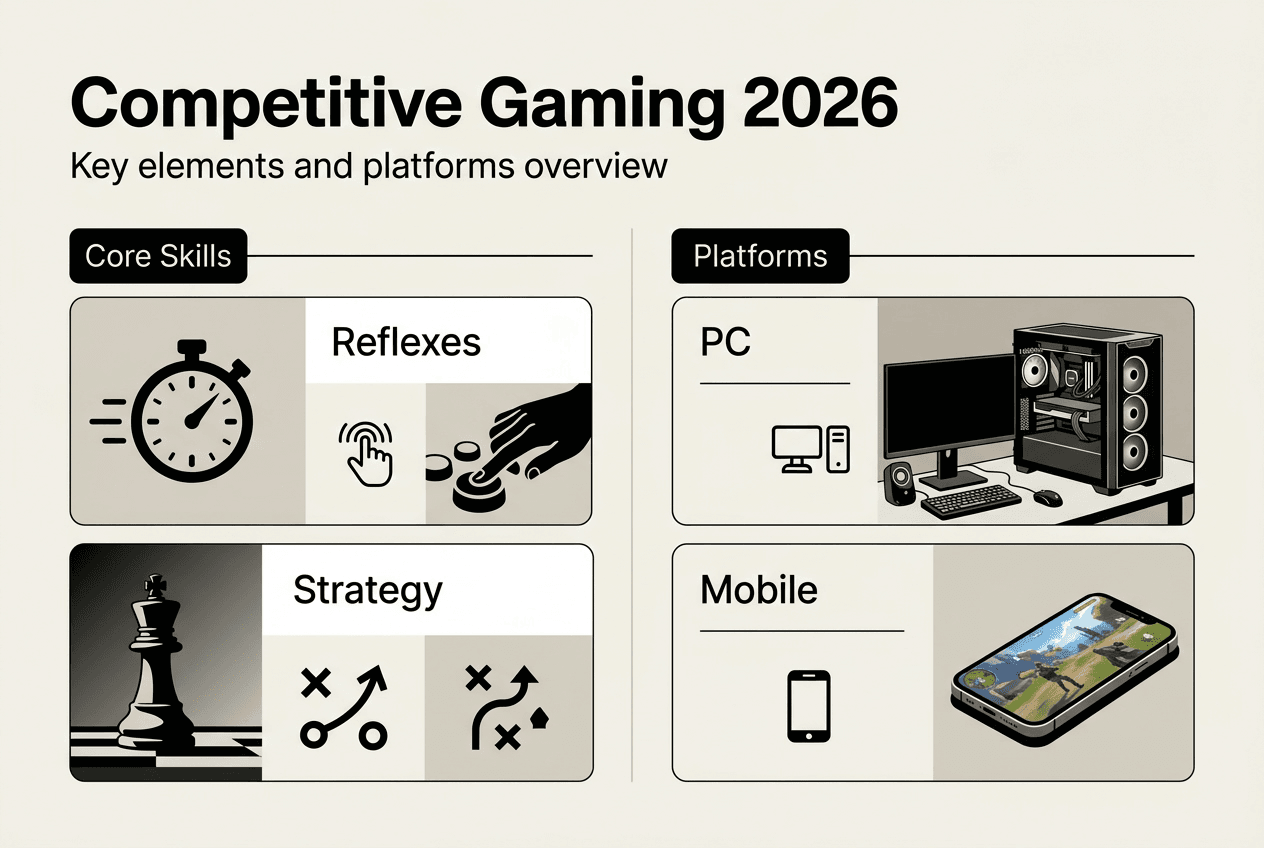
Competitions reflect platform dynamics. PC tournaments typically occur in dedicated esports arenas with high-end equipment and controlled environments. Mobile tournaments adapt to regional needs, sometimes hosting competitions in convention centers or leveraging online qualifiers to reach broader audiences. Both formats have produced millionaire players and attracted major brand sponsorships, validating competitive gaming across devices.
Essential skills and strategies for success in competitive gaming
Core skills separate competitive gamers from casual players. Hand-eye coordination enables precise aim in shooters and accurate inputs in fighting games. Reaction time determines who lands the first shot or blocks the incoming attack. Game sense, the intuitive understanding of opponent positioning and likely actions, develops through hundreds of hours of play. Decision making under pressure distinguishes clutch players who thrive in tournament settings from those who crumble when stakes rise.
Competitive gamers require fast reflexes, strategic thinking, teamwork, and adaptability to succeed at high levels. Strategic thinking involves understanding win conditions, resource allocation, and when to take calculated risks versus playing conservatively. In team-based games, communication becomes paramount. Clear callouts about enemy positions, coordinated ability usage, and maintaining positive team morale during losing streaks all contribute to victory.
Effective strategies vary by game but share common principles:
- Map control provides information advantages and limits opponent options
- Resource management ensures you have necessary tools for crucial moments
- Adaptation to opponent playstyles prevents predictability and counters enemy strategies
- Mental resilience maintains performance during long tournaments or after devastating losses
- Continuous learning through replay analysis identifies mistakes and improvement opportunities
Pro Tip: Recording and analyzing your gameplay reveals patterns you miss during live play. Spend 30 minutes weekly reviewing losses to identify recurring mistakes, then dedicate practice time specifically to those weaknesses. This targeted improvement accelerates skill development far more than mindless grinding.
Gaming hardware significantly impacts competitive performance. Understanding gaming hardware 2026 guide helps optimize your setup. High refresh rate monitors reduce input lag and provide smoother visuals for tracking fast movement. Gaming mice with precise sensors enable consistent aim. Mechanical keyboards offer tactile feedback for reliable inputs. For mobile gamers, devices with high touch sampling rates and minimal input delay provide competitive advantages. Even network equipment matters, as stable low-latency connections prevent frustrating lag during crucial moments.
Different genres emphasize varying skill combinations. First-person shooters prioritize mechanical aim and reflexes, though strategic positioning and utility usage matter greatly at high levels. MOBAs demand strategic thinking and teamwork over raw mechanical skill, though last-hitting minions and landing skill shots require precision. Strategy games minimize mechanical requirements while maximizing strategic depth and adaptability. Fighting games test execution consistency and matchup knowledge. Recognizing which skills your chosen game emphasizes helps focus practice efficiently. Exploring mobile gaming tips better play can accelerate improvement for smartphone competitors.
The evolving landscape of competitive gaming in 2026: trends and future directions
The competitive gaming industry has reached unprecedented scale in 2026. Revenue streams from sponsorships, media rights, merchandise, and ticket sales continue expanding as mainstream brands recognize esports’ marketing potential. Viewership numbers rival traditional sports for major events, with peak concurrent viewers exceeding millions for championship finals.
| Metric | 2026 Figures | Growth Driver |
|---|---|---|
| Global esports revenue | $1.8 billion | Sponsorships and media rights deals |
| Total esports audience | 640 million viewers | Mobile gaming accessibility in emerging markets |
| Professional players earning $100k+ annually | Over 500 players | Increased prize pools and salary structures |
| Mobile esports revenue share | 35% of total | Rapid growth in Asia and Latin America |
The esports industry is growing rapidly in 2026, driven by mobile esports, streaming, and global audience expansion. Mobile gaming accessibility has democratized competitive gaming, allowing players without expensive PC setups to compete seriously. Improved streaming platforms with better mobile integration enable fans to watch tournaments anywhere. Major brands from automotive to fast food now sponsor teams and events, bringing legitimacy and capital to the ecosystem.
Hybrid events combining in-person and online participation have become standard. This format maximizes accessibility while preserving the excitement of live audiences. Regional qualifiers occur online, reducing travel costs for amateur players, while finals take place in arenas with thousands of fans. This structure has expanded competitive opportunities for players in regions previously underserved by esports infrastructure.
Pro Tip: Following industry news keeps you informed about emerging games, rule changes, and new tournament opportunities. Subscribe to esports news sites, follow professional players on social media, and join community discussions to stay ahead of meta shifts and spot rising competitive scenes early.
Player and viewer diversity has increased substantially. Women’s leagues and tournaments have grown, though gender representation remains uneven across games. Age diversity spans from teenage prodigies to players competing into their 30s, challenging stereotypes about gaming as exclusively youth-dominated. Geographic diversity has exploded as internet infrastructure improves globally, with competitive scenes emerging in regions like Southeast Asia, Latin America, and the Middle East.
Grassroots tournament investment represents another significant trend. Game publishers and third-party organizers now fund amateur competitions, creating pathways from casual play to professional careers. This infrastructure development ensures talent pipelines remain healthy and gives aspiring competitors realistic progression routes. Understanding why esports is growing 2026 reveals how these interconnected trends reinforce each other, creating sustainable growth rather than temporary hype.
Explore competitive gaming resources and gear at PCMobileGames
Navigating the competitive gaming landscape requires reliable information and quality equipment. PCMobileGames provides comprehensive guides covering everything from gaming hardware 2026 guide essentials to understanding why esports is growing 2026. Whether you need honest game reviews, expert tips for improving your play, or updates on the latest competitive trends, the site offers resources tailored to both PC and mobile gamers.
Staying informed about hardware developments helps you maintain a competitive edge. PCMobileGames features detailed reviews of gaming peripherals, performance comparisons, and recommendations for different budgets. The site’s esports coverage keeps you updated on tournament results, roster changes, and emerging competitive titles worth watching or playing.
Visit PCMobileGames to access guides, reviews, and community insights that support your competitive gaming journey. From beginner tutorials to advanced strategy breakdowns, the platform serves gamers at every skill level looking to improve their play and stay connected with the evolving competitive scene.
Frequently asked questions
What is the difference between competitive gaming and esports?
Competitive gaming encompasses all organized video game competitions, from local tournaments with small prize pools to online ranked ladders where players compete for rankings. Esports specifically refers to professional-level competitions featuring salaried players, large audiences, broadcast production, and substantial prize money. All esports are competitive gaming, but not all competitive gaming qualifies as esports.
How can I start competing in competitive gaming?
Begin by selecting a game that interests you and commit to regular practice focused on improvement rather than just playing casually. Join online ranked modes to test your skills against similarly skilled opponents and identify areas needing work. Research local gaming communities or online tournaments that welcome beginners, as competition experience is crucial for development. Check out resources on where to start in esports for detailed guidance on entering competitive scenes.
What skills are most important for competitive gaming success?
Fast reflexes and hand-eye coordination provide the mechanical foundation for executing techniques consistently under pressure. Strategic thinking enables you to outmaneuver opponents through superior decision making rather than relying solely on mechanical skill. Teamwork and communication prove essential in team-based games, where coordinated plays beat individual talent. Adaptability allows you to adjust strategies mid-match when opponents counter your initial approach. Quality gaming hardware eliminates technical barriers that could handicap your performance against equally skilled opponents.
Are mobile games considered part of competitive gaming?
Yes, mobile esports has surged as a key part of competitive gaming in 2026, with dedicated leagues, professional teams, and millions in prize money. Games like PUBG Mobile and Mobile Legends host regional and international tournaments attracting massive viewership. Mobile competitive gaming is especially dominant in regions where smartphone penetration exceeds PC ownership, creating thriving scenes in Southeast Asia, India, and Latin America. The mobile esports guide provides comprehensive coverage of this rapidly growing segment.
Recommended
- What is gaming hardware? A 2026 guide for gamers
- What is mobile esports? A complete 2026 guide for gamers
- What is mobile gaming: complete 2026 guide
- Stay Updated on Gaming News: 60% More Coverage in 2026
Comments
0 comments

